Case 02 · CareConnect · 2023–2024
- Role
- Senior Product Designer
- Timeline
- 2023–2024
- Platform
- Web SaaS · Mobile
- Domain
- Healthcare · AI
- Team
- With engineering
↓ Scroll — the work
Hire care workers faster
reduced time-to-fill
Care professional engagement
vs. baseline at launch
Reduce turnover
improved retention
Caregiver pool optimised
projected via AI-matched staffing
Shift placement speed
better caregiver-shift matching
Caseload capacity per agency
more clients without more burden
As a product designer, I shaped the platform that gives agencies the tools and insights they need to attract, engage, and retain top caregiver talent while reducing operating costs and growing revenue. Our design work encompassed a complete solution suite, including:
Smart Caregiver-Client Matching
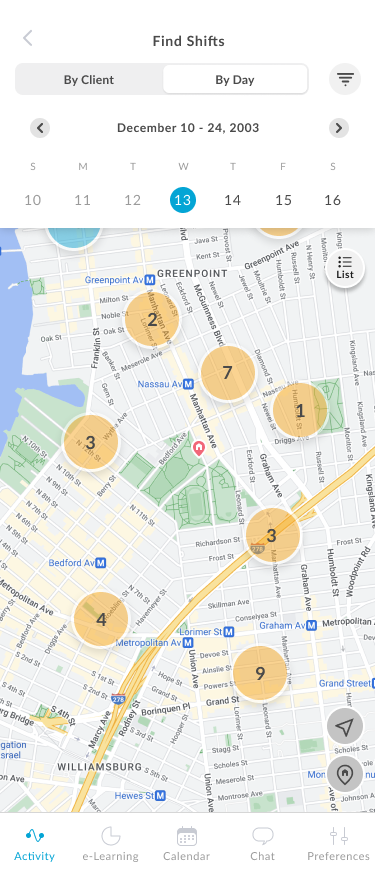
AI-powered matching algorithm that connects caregivers with clients based on skills, location, and preferences
Workload Optimization
Intelligent scheduling system that optimizes caregiver workloads and reduces travel times
Built-in E-Learning Modules
Comprehensive training platform for remote caregiver onboarding and skill development
Smart Scheduling
Advanced scheduling tools with real-time updates and conflict resolution
Secure In-App Messaging
HIPAA-compliant messaging system for seamless team communication
Compliance Tracking
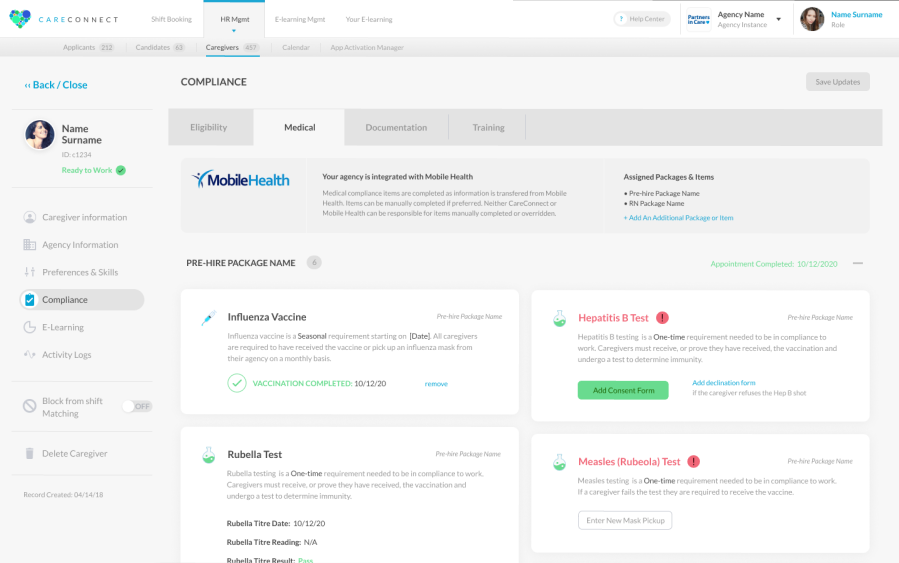
Advanced compliance monitoring and reporting for agency oversight
End-to-End Visual & UX Design
Created a comprehensive design system to support continuous product development and feature expansion across all platforms.
Web Application Development
Designed both the admin portal and agency portal interfaces ensuring streamlined operations for all user types.
Native Mobile App Design
Fully native iOS and Android applications, optimized for performance, user experience, and seamless platform integration.
Advanced Matching Algorithm
Designed an intelligent matching system that pairs caregivers with shifts, significantly reducing costs and travel times.
Streamline shift planning and caregiver management
Improve coordinator visibility through real-time dashboards
Enable a smooth, compliant onboarding and training process
Build a foundation for scalable AI-driven optimization
Accessible at clinical standard. In a healthcare context, care professionals may work outdoors in bright light, under stress, or with assistive technology — and errors in the handoff form have real consequences. Every interface was validated to WCAG 2.1 AA: 4.5:1 minimum contrast on all clinical data, complete keyboard navigation, and screen-reader-compatible ARIA labels throughout. The caregiver profile and shift acceptance flows were also tested with VoiceOver during moderated sessions.
Process
Design Process
From research to delivery — an iterative, human-centered approach that shaped every decision.
Discovery & Research
User interviews and stakeholder workshops to identify pain points.
Define & Synthesize
Journey maps and user flows from research insights.
Ideate & Wireframe
Rapid ideation producing wireframes for dashboards and tools.
Design & Prototype
Hi-fi designs for web portals and native mobile apps.
Test & Iterate
Usability testing and feedback loops refining every interface.
Deliver & Scale
Production-ready handoff with specs for web and mobile.
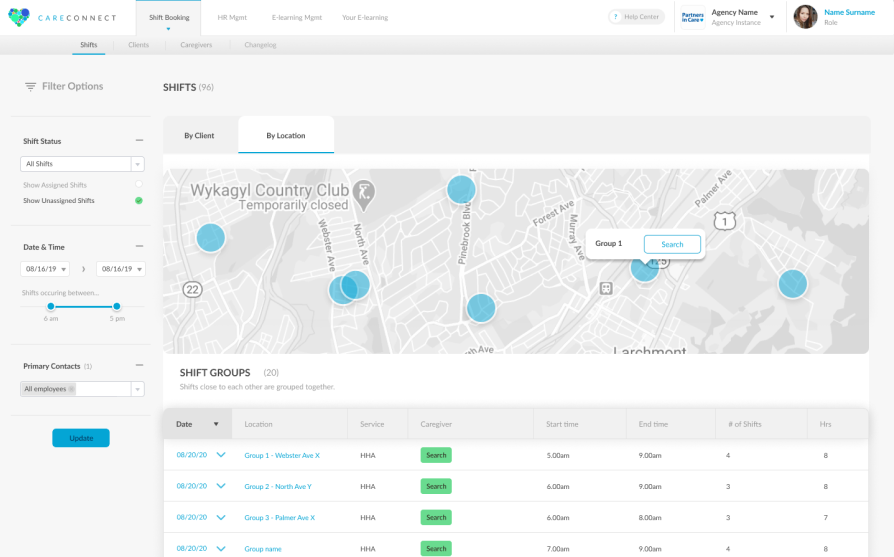
A comprehensive web platform optimizing workflows for administrators and agency teams.
Caregiver Overview Dashboard
Real-time insights into caregiver availability and compliance metrics
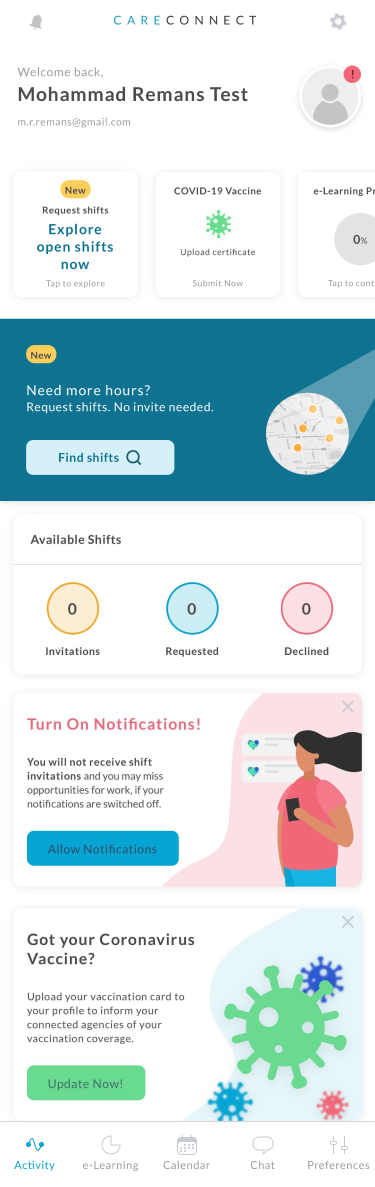
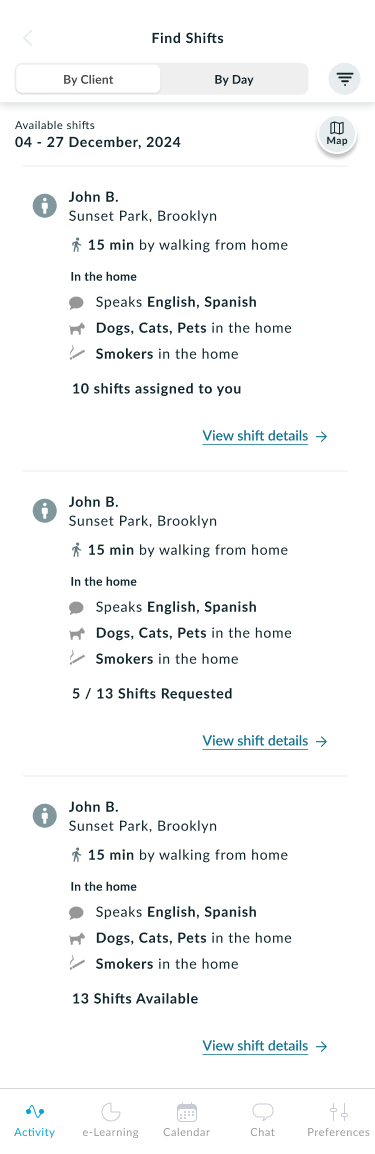
Native mobile workflows for caregivers to discover shifts, plan calendars, manage locations, and close feedback loops.
The results clearly demonstrated the impact of thoughtful design and intelligent automation:
Projected reduction in caregiver pool while maintaining shift coverage through AI-optimized staffing
Improved speed in shift placement and reduced cancellations through better caregiver-shift matching
Increased caseload capacity per agency, leading to higher efficiency, greater revenue, and overall business success
Integrated features enabled early wage access and simplified compliance workflows promoting happier caregivers
Signal
Caregiver pool utilisation sat at 43% against a 60% target. Coordinators were manually matching workers to care requests without visibility into schedule alignment.
What Changed
Designed a smart availability overlay that surfaced workers whose existing schedules left gaps matching the care request window — reducing manual cross-referencing.
Outcome
Pool utilisation reached 58% within 6 weeks of rollout. Coordinator time spent on manual matching dropped by roughly half.
Signal
Moderated sessions with 5 agency coordinators showed they spent 8–12 minutes per shift writing handoff notes from scratch — a task that had no structured format and was prone to omissions.
What Changed
Designed a structured handoff form pre-populated with context from the previous visit log. Fields were ordered by what care professionals said they actually needed first.
Outcome
Handoff completion time dropped 48%. Post-testing interviews showed care professionals felt significantly more confident starting shifts with a structured summary.
Signal
Funnel data showed care professionals abandoning shift acceptance after opening client profiles — session recordings revealed the profile page averaged 3.8s load time on mobile.
What Changed
Collaborated with engineering to define a progressive loading strategy: critical info (name, care needs, location) loaded immediately; secondary sections deferred. Redesigned the skeleton state to reduce perceived wait.
Outcome
Load time reduced to 1.1s. Shift acceptance completion rate increased 31% within 4 weeks.