Case 05 · Eezy Customer · 2023–2025
- Role
- Lead Product Designer
- Scope
- Web + Mobile
- Platform
- B2B SaaS
- Outcome
- Self-serve workforce ops
- Team
- Embedded in product team
↓ Scroll — the work
Faster fulfillment
after 2025 release
Shifts filled <1 min
instant matching
Shifts filled <17 min
even at peak demand
Mobile in Action
The 1-Minute Shift
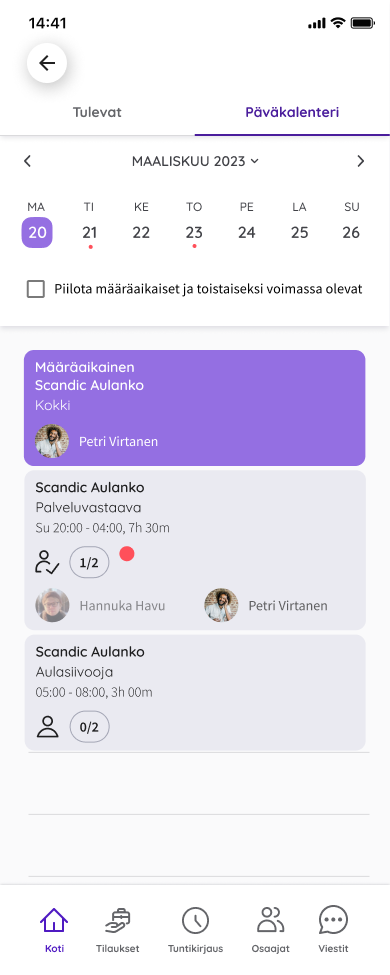
Watch a field manager fill an urgent staffing gap in seconds — directly from their phone.
Shifts filled <1 min
Faster fulfillment
© Eezy Oyj
In enterprise environments, slowness isn't just inconvenient, it's catastrophic. When a hotel loses a night-shift worker or a hospital can't fill a critical role, the consequences are immediate and visible.
Shift ordering relied on phone calls and email chains, creating bottlenecks during peak demand.
Managers lacked a real-time, 24/7 view of workforce status across multiple sites.
A missing worker equals immediate service failure—guests waiting, deliveries delayed, operations halted.
HR teams juggled multiple disconnected systems, leading to data silos and duplicated effort.
"Slowness wasn't just a UX problem. It was a direct business risk with measurable impact on client satisfaction and revenue."
Vision
The "Digital Heart"
"Eezy Personnel Services is the first company in its industry to use artificial intelligence comprehensively throughout the staffing process, from matching work and talent to payroll and invoicing."
© Eezy Oyj — Platform Demo
The system is designed to be "awake 24/7", continuously matching labor demand and supply in real time, even when human managers are asleep.
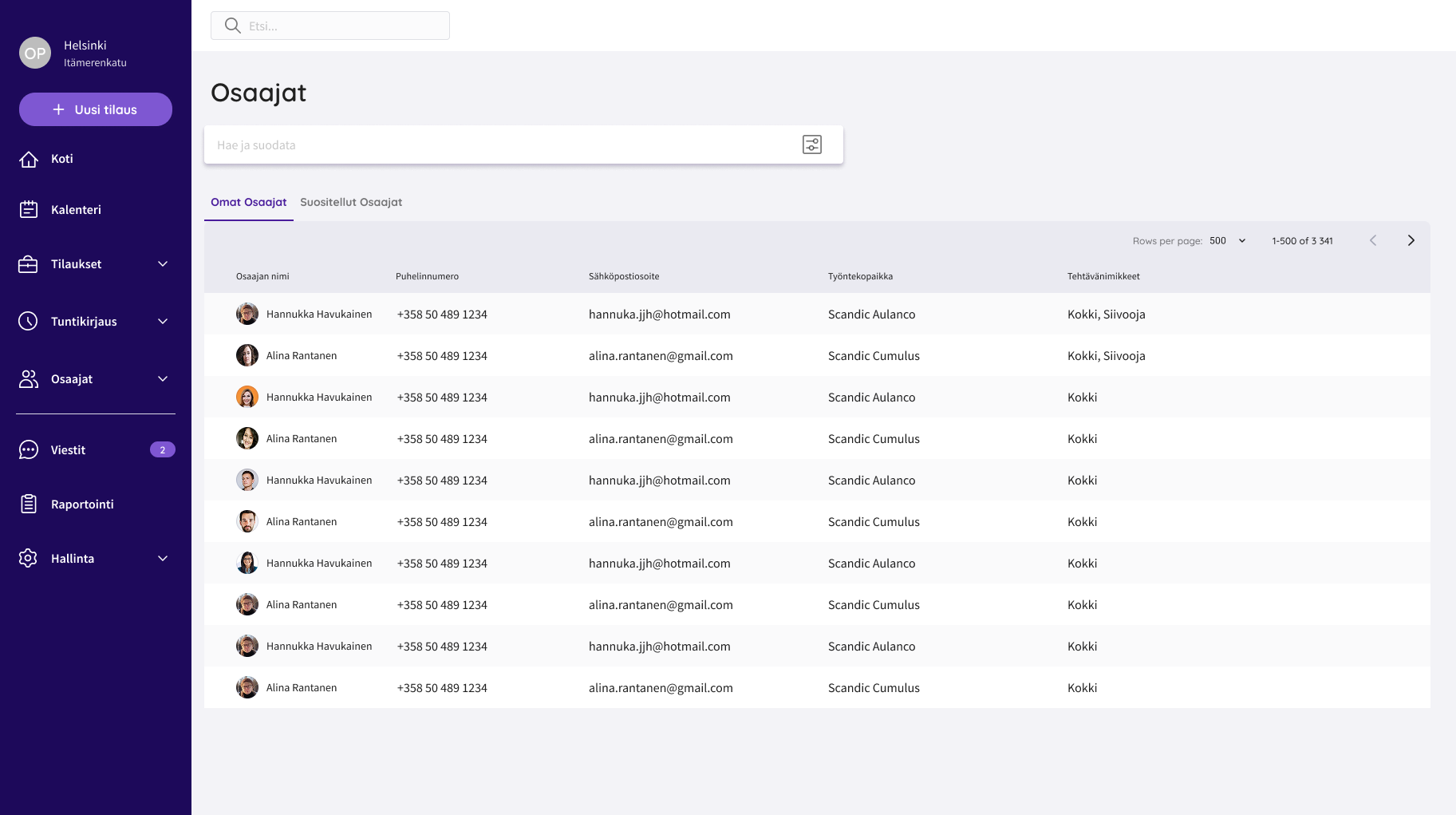
The Web Portal
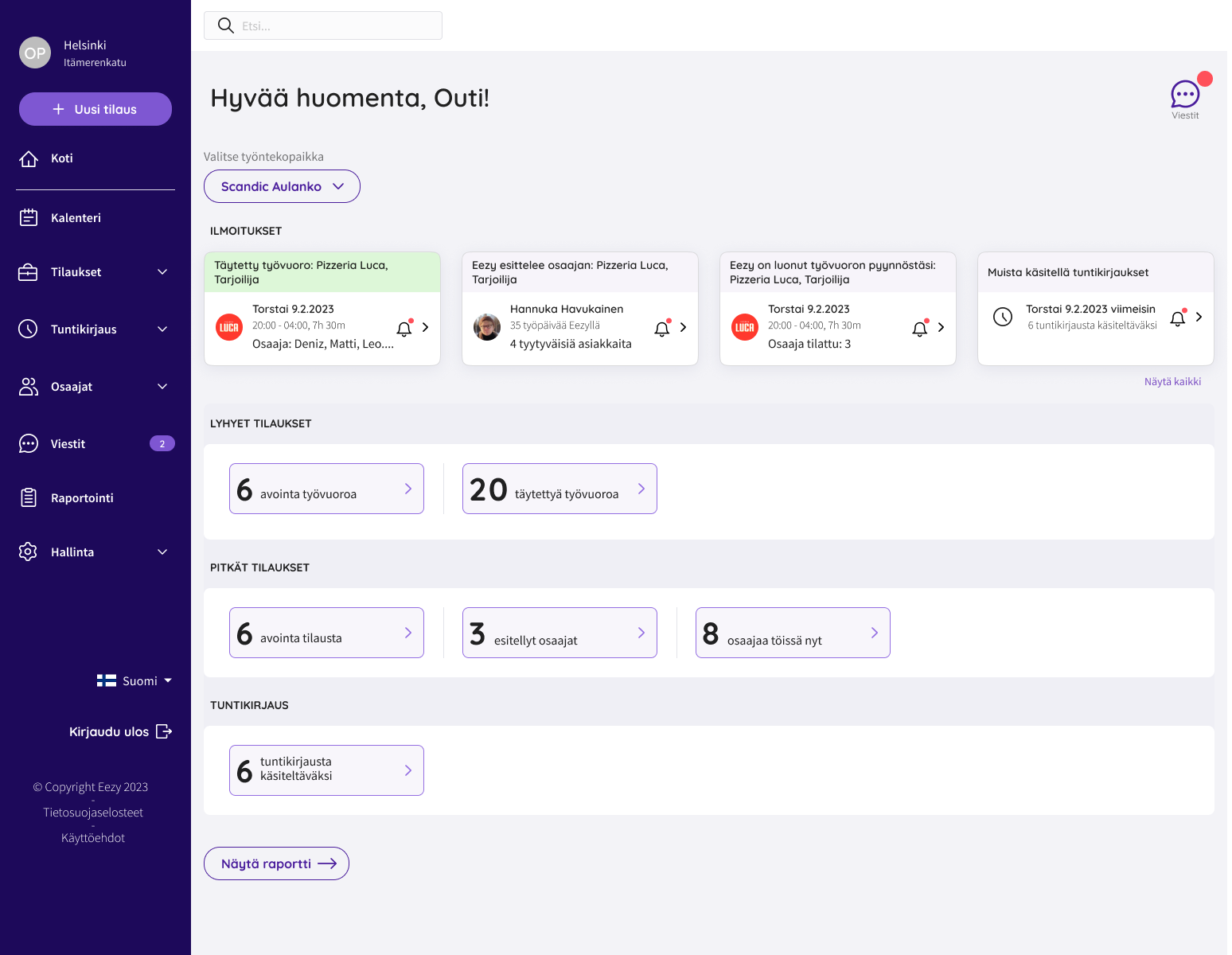
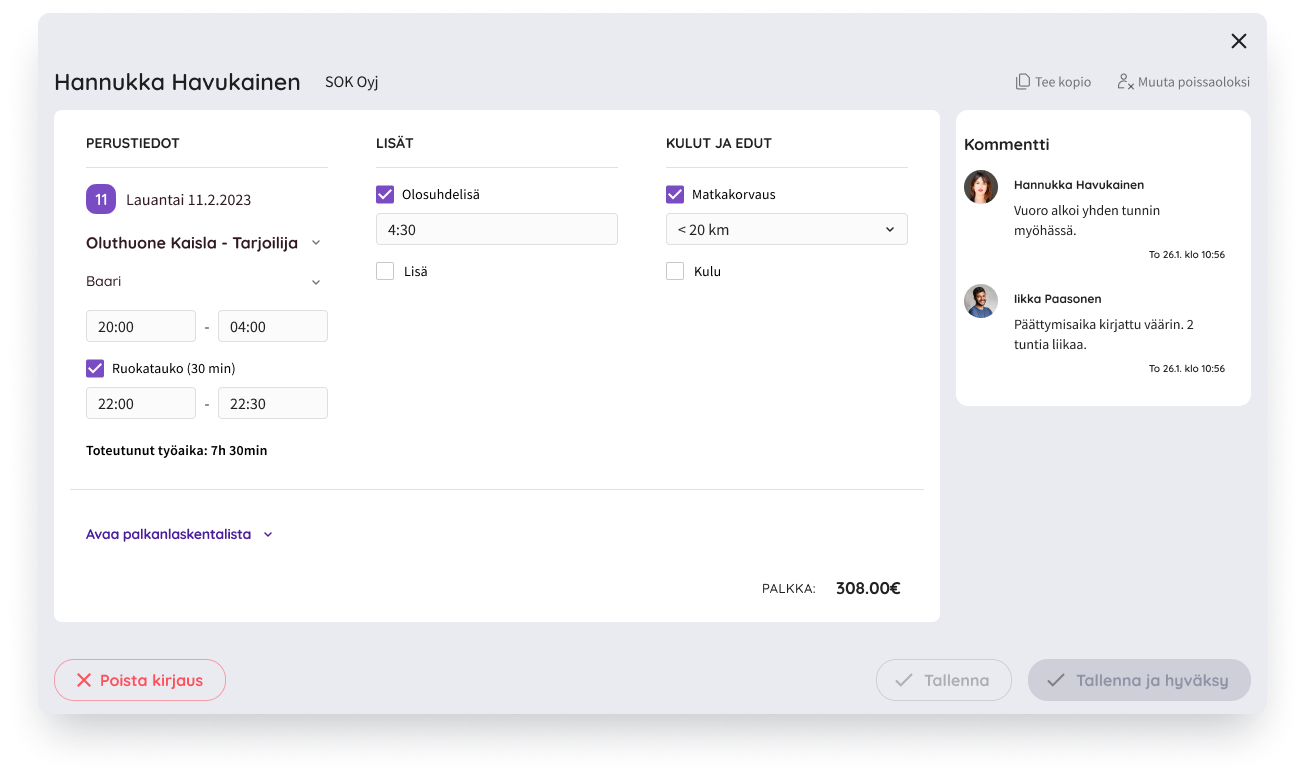
Power UsersA robust dashboard built for office managers and HR professionals who need complete oversight of their workforce operations.
- Managing Expert Pools, pre-vetted workers ready for deployment
- Handling large-scale staffing and payroll oversight
- Monitoring live staffing status across multiple sites
The Mobile App
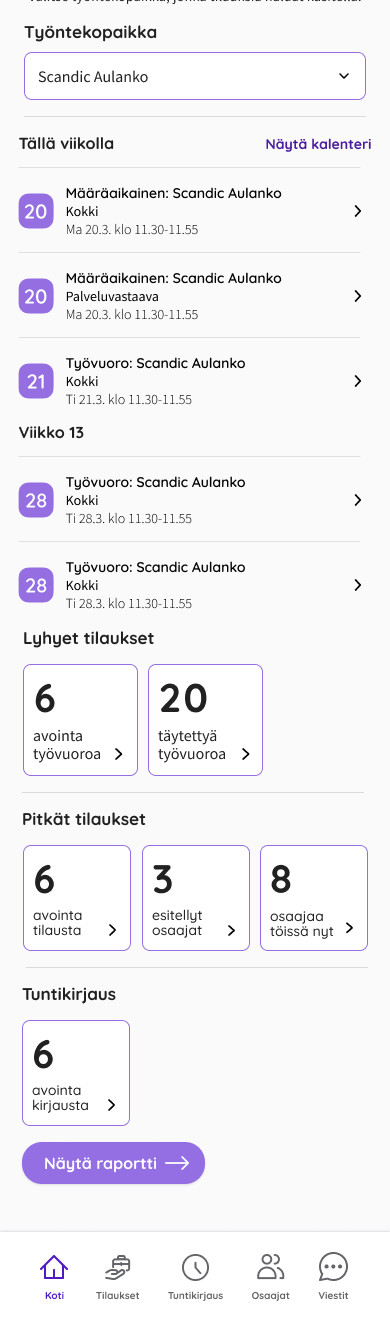
Acute NeedsThe "1-Minute Shift" concept, designed for field managers who need workers NOW.
- Few-click emergency staffing when seconds matter
- Optimized for speed and reachability under stress
- Designed for on-the-go managers away from desks
The AI Matchmaker
The UI visualizes AI activity in real-time, building trust through transparency. Users see exactly what the system is doing, not just the results.
Live indicators showing AI as it searches, evaluates, and contacts candidates.
Clear system messages explaining each step of the matching process.
Reinforcing confidence by showing quality signals and match criteria.
Accessibility was designed in, not bolted on. Colour is never used as the sole indicator of shift status — each state carries both a visual badge and a text label. All form controls in the order creation flow are keyboard-accessible, error messages meet AA contrast requirements, and the mobile app's touch targets respect the 44×44px minimum across both the coordinator and talent-facing surfaces.
Automation doesn't replace human judgment, it amplifies it. Every worker is still personally interviewed despite the speed.
Designing for Trust
When AI does the work, the interface must over-communicate quality and confidence. Users need to see the system thinking, not just the results. Transparency builds trust faster than speed alone.
Ecosystem Thinking
Success came from designing the invisible handoffs between systems, not just a single app. The magic happens in the moments when data flows seamlessly between Expert, Customer, and Talent apps.
Signal
Mobile session duration was 41% shorter than web, and order creation had a 54% abandonment rate at step 2 — users starting shifts then dropping off.
What Changed
Rebuilt the mobile order form as a progressive 3-step flow with inline validation. Removed fields that analytics showed were rarely edited at creation time.
Outcome
Mobile order creation abandonment dropped from 54% to 19% in 30 days.
Signal
Coordinators reported via support tickets that they could not distinguish active vs. pending shifts in the day view at a glance, especially during peak morning hours.
What Changed
Added status colour-coding on shift cards and a sticky shift-state summary bar anchored to the top of each day column.
Outcome
Support tickets about shift status confusion fell 60%. Coordinators in follow-up interviews described the change as "the one thing I didn't know I needed".
Signal
Time-to-fill tracking showed a 22-minute average vs. the 17-minute target. The bottleneck was coordinators manually scanning the talent list instead of using suggested matches.
What Changed
Designed a "Smart Suggest" panel surfacing the 3 best-matched talents at the top of the assignment drawer, ranked by availability, proximity, and past performance.
Outcome
Median fill time dropped to 14 minutes — below the original target. 25% of shifts were filled within 60 seconds by the 2025 release.
Signal
Moderated sessions with 6 coordinators revealed that AI-driven matching felt "opaque" — coordinators were overriding suggestions without reading them because they did not trust the logic.
What Changed
Added a match rationale layer: a single line per suggested talent explaining the top 2 reasons for the match (e.g. "Available · Worked this role 4× before"). Tested 3 copy variants.
Outcome
Coordinator override rate dropped from 31% to 9%. Trust in the AI surface measurably increased — a follow-up NPS for the feature went from 24 to 61.
A comprehensive enterprise portal designed for HR professionals and office managers who need complete oversight of workforce operations.
High-Velocity Dashboard
Real-time staffing gaps with AI progress indicators and live workforce status
The '1-Minute Shift' concept — designed for field managers who need to fill urgent staffing gaps instantly from their phone.
Upon acceptance, the employer instantly sees the worker's profile, rating, and ETA.
For 50% of cases, this entire loop closes in under 17 minutes.
Speed, trust, and system-level thinking combined to transform how enterprise staffing works at scale.