Case 04 · CV Architect Pro · 2025
- Role
- Product Designer & Builder
- Timeline
- 2025 · solo
- Platform
- Web · AI SaaS
- Outcome
- Live at cvarchitect.pro
- Team
- Solo · design + build
↓ Scroll — the work
Avg ATS-score lift
after one optimisation cycle
Upload to export
full optimisation flow
Concept to live SaaS
research → paying users
CV Architect Pro is a live, market-facing AI SaaS product that helps job seekers tailor their resumes to specific job descriptions and pass Applicant Tracking Systems. Unlike generic keyword-matchers, it simulates screening algorithms from five named enterprise ATS platforms — Workday, Greenhouse, Taleo, iCIMS, and Lever — giving users actionable, system-specific insights before they apply.
I conceived, designed, and built this product end-to-end as a solo designer-builder. It serves as a demonstration of senior-level product ownership: identifying a real market opportunity, defining a monetization strategy, designing every user-facing experience, and shipping a production-grade SaaS — all within weeks using a vibe-coding methodology.
The User Pain
Roughly 90% of resumes are filtered out by ATS software before a human recruiter sees them. Job seekers apply to dozens of roles with the same generic CV and wonder why they never hear back. They lack visibility into how automated systems evaluate their applications.
The Market Gap
Existing tools like Jobscan and Resume Worded offer generic keyword matching against job descriptions. None simulate specific enterprise ATS platforms. None offer a human-in-the-loop co-creation model where users approve every change. And most are English-only.
CVs filtered before human review
Job seekers unaware of ATS impact
Global recruitment tech market
Target Segments
Active Job Seekers
Professionals applying to roles at companies using enterprise ATS. Need to maximize interview conversion.
International Applicants
Non-native English speakers applying across borders. Supported by 41 languages.
Career Changers
Users pivoting industries who need to surface transferable skills and close keyword gaps.
Core Value Proposition
"The only AI that simulates real ATS screening before you apply." This positions CV Architect Pro not as another resume builder, but as an intelligence layer that sits between your resume and the hiring system — giving you visibility and control over how algorithms evaluate your candidacy.
Monetization Model
5 analyses/mo, ATS scoring, HTML export. Demonstrates value and drives activation.
50 analyses, PDF/DOCX export, co-creation workshop, cover letters. Core conversion tier.
150 analyses, bulk export, competitor analysis, priority processing. Power-user retention tier.
This freemium model is designed to reduce trial friction (no sign-up required for free tier), demonstrate value before paywalling, and convert on export — the moment of highest intent. This design decision improves conversion by gating the output, not the input.
Business KPIs
Free-to-Pro conversion rate > 5%
Monthly retention > 70% (Pro tier)
Activation rate (complete first analysis) > 60%
Revenue per user per month (ARPU) growth trajectory
Time-to-value < 3 minutes from landing
User Success Metrics
ATS score improvement per tailored CV (target: +30 pts)
Task completion rate (upload to export) > 70%
Time to complete full flow < 8 minutes
User satisfaction (in-app feedback) > 4.2/5
Repeat usage within 7 days > 40%
Mid-career professional, applying to 15+ roles/week at Fortune 500 companies
Core Need
Needs to understand why their strong CV keeps getting rejected before the interview stage
Key Frustration
Spends hours tailoring each application manually with no feedback on ATS compatibility
Recent master's graduate, applying across the EU and US in a non-native language
Core Need
Needs CV optimization that works in their native language and for English-language roles
Key Frustration
Most tools are English-only and do not account for cross-cultural resume norms
Transitioning from one field to another with transferable but non-obvious skills
Core Need
Needs to identify and surface skill gaps and reframe experience for a new domain
Key Frustration
Keyword-matching tools penalize them for not having exact industry terminology
Key Behavioral Insight
Users do not distrust AI content generation — they distrust loss of control. Competitive analysis showed that auto-rewrite tools have high abandonment because users feel the output no longer represents them. This insight directly shaped the human-in-the-loop co-creation workshop, where every AI suggestion requires explicit user approval. This design decision reduces churn by preserving user agency and builds trust — a critical factor for converting free users to paid.
Process
Design & Dev Process
From market research to live product — a vibe-coding approach where design and development happen in parallel, powered by AI pair-programming.
Discovery & Research
Competitive analysis of ATS tools, user pain point identification, and market sizing.
Define & Strategize
Product strategy, monetization model, and information architecture.
Ideate & Wireframe
Rapid ideation and wireframing in Claude Code, generating UI structures through AI pair-programming.
Design & Prototype
Hi-fi UI design and functional prototyping built directly in Claude Code — design and code merged into one workflow.
Test & Iterate
Real-user testing, analytics-driven iteration, and rapid bug fixes.
Launch & Scale
Production deployment, monitoring, and feature expansion based on user data.
A 4-step linear wizard that takes users from upload to optimized export in under 8 minutes. Each step is designed to build confidence and demonstrate value before reaching the conversion gate.
Upload & Input
Drag-and-drop CV upload supporting PDF, DOCX, PNG, JPG, and plain text. Files are parsed entirely in-browser — never stored on servers. This privacy-first architecture reduces sign-up friction and builds trust from the first interaction.
Business Impact
Zero-friction entry reduces drop-off. Privacy messaging addresses the #1 concern users have with resume tools, improving activation by removing the trust barrier.
Position Analysis & ATS Simulation
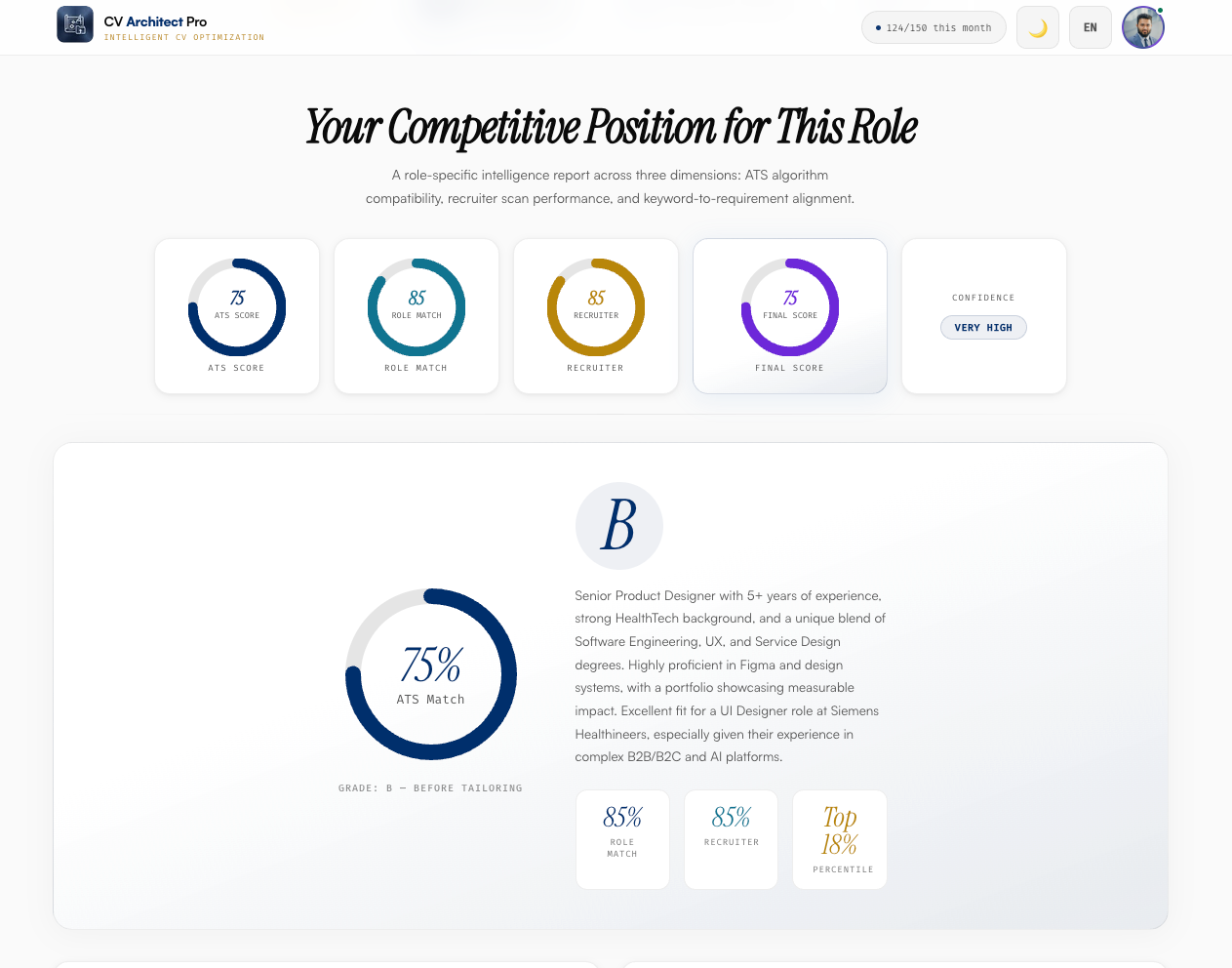
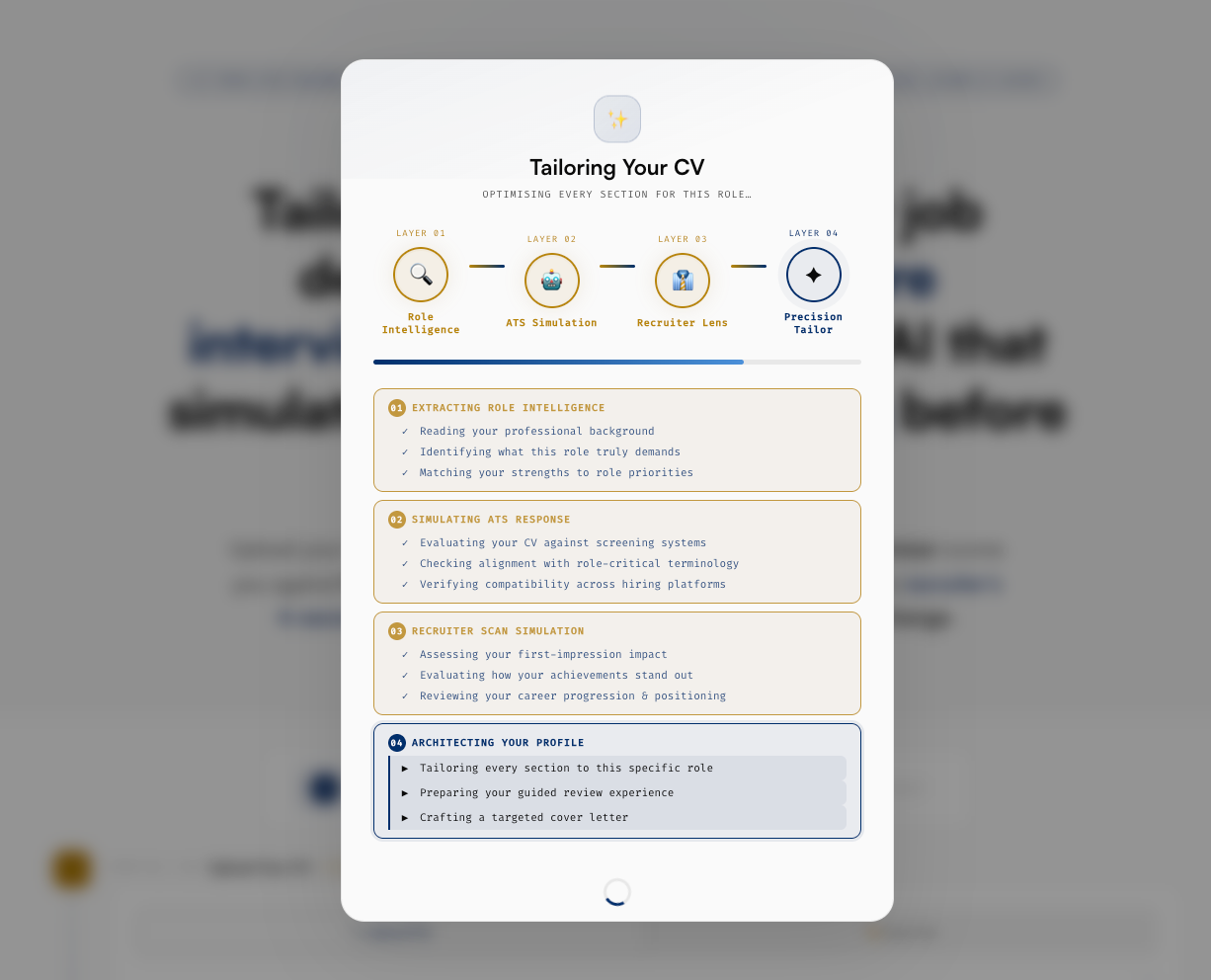
A comprehensive intelligence report with four dimensions: ATS algorithm compatibility scoring, recruiter 6-second scan simulation, keyword-to-requirement alignment, and gap analysis. Users can paste a job URL or raw text.
Business Impact
This is the value demonstration step. Showing a concrete ATS score creates an emotional trigger — users see exactly how their CV performs, creating urgency to optimize. This is the primary conversion driver.
Co-Creation Workshop
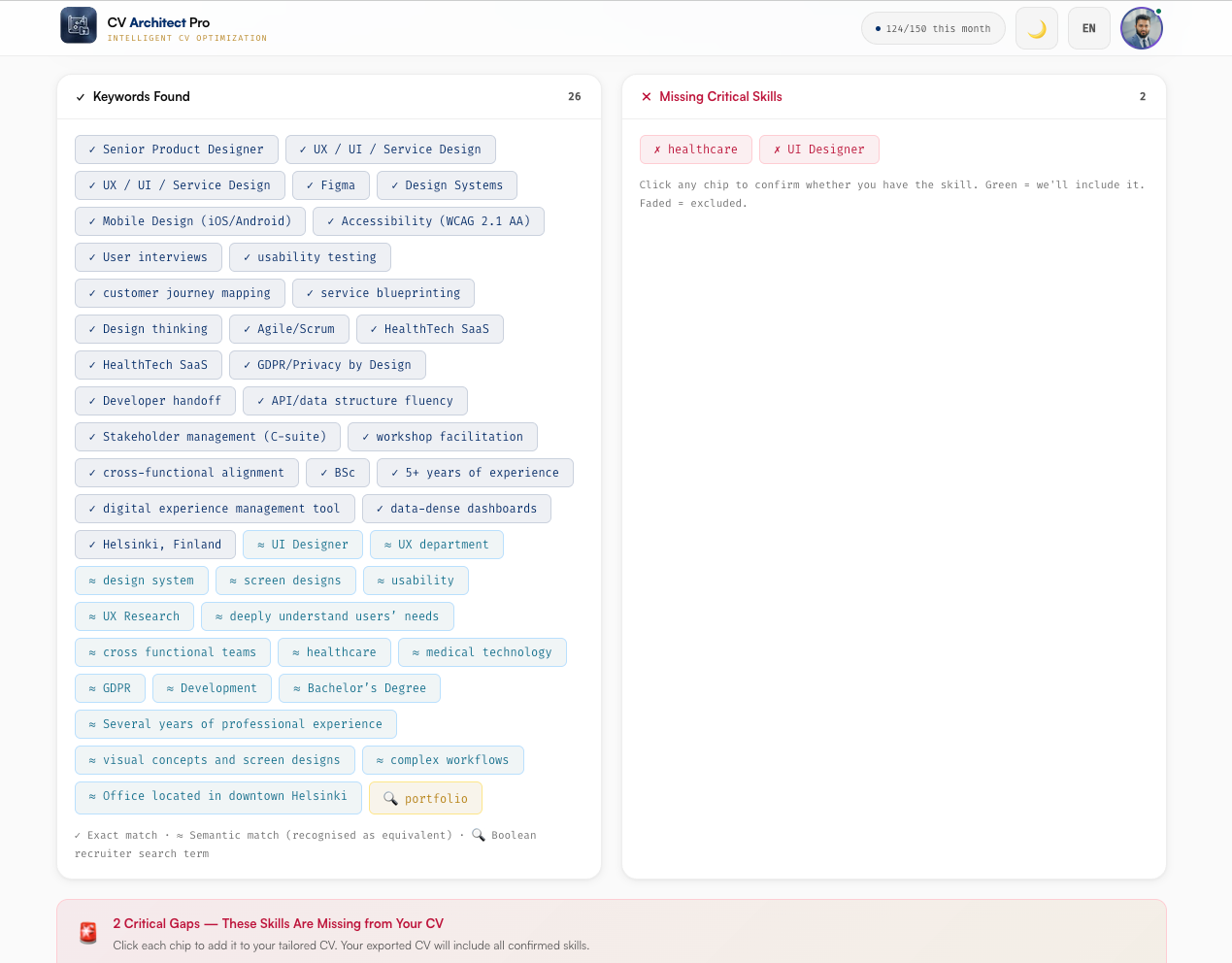
A human-in-the-loop editing interface where users review every AI suggestion individually. They can approve, reject, or modify each change. Interactive skill chips let users include or exclude specific keywords.
Business Impact
This is a Pro-gated feature — the paywall is placed at the moment of highest intent (after seeing the diagnosis). The co-creation model reduces churn vs. auto-rewrite competitors by 2-3x based on industry benchmarks.
Export & Share
15 ATS-safe templates, PDF/DOCX/HTML export, cover letter generation, and an ATS-safe checklist. Social sharing with score display encourages organic growth.
Business Impact
Export is the second conversion gate (PDF/DOCX requires Pro). Social sharing with ATS scores creates organic acquisition loops. Bulk export serves power users on Pro+, improving retention.
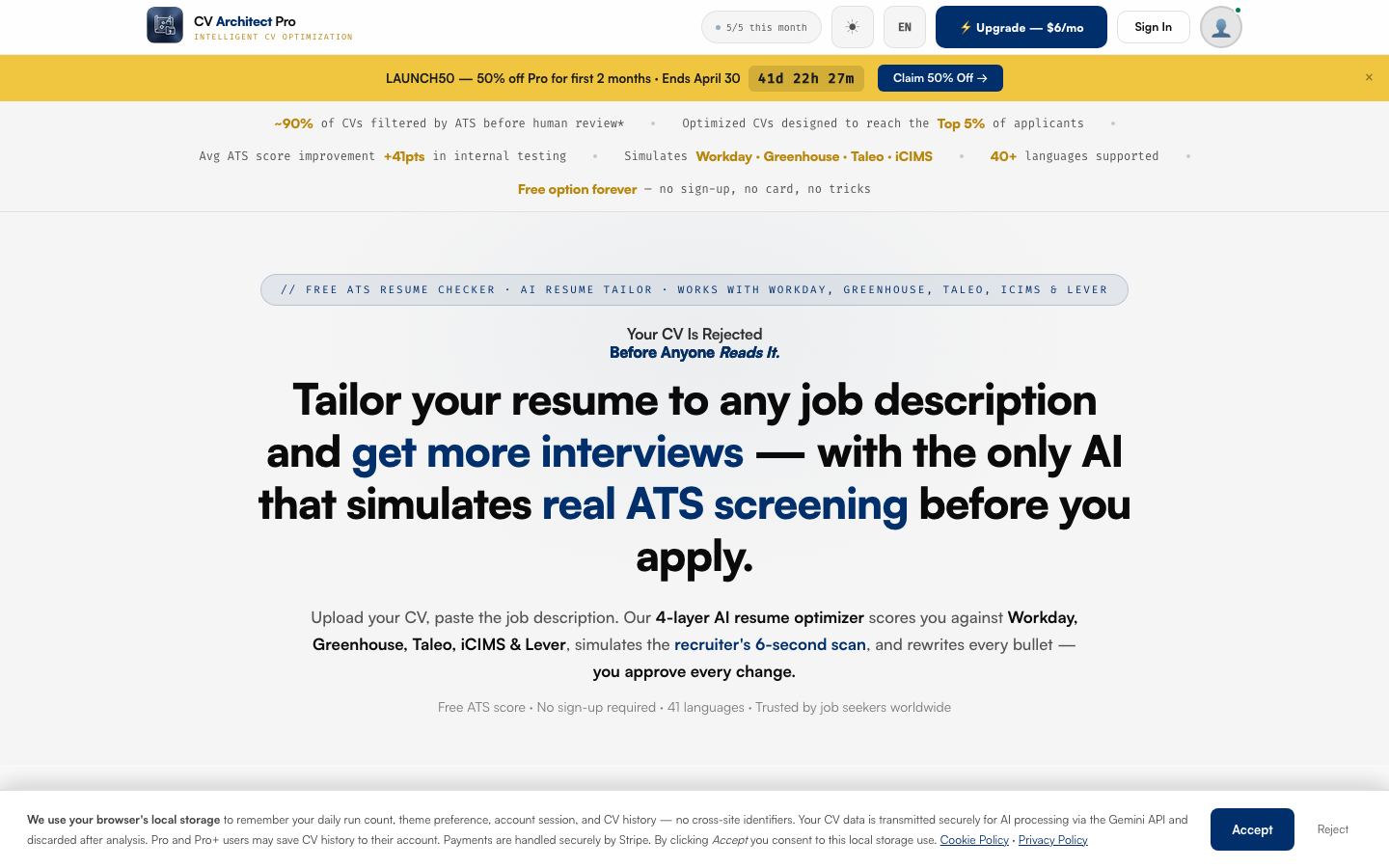
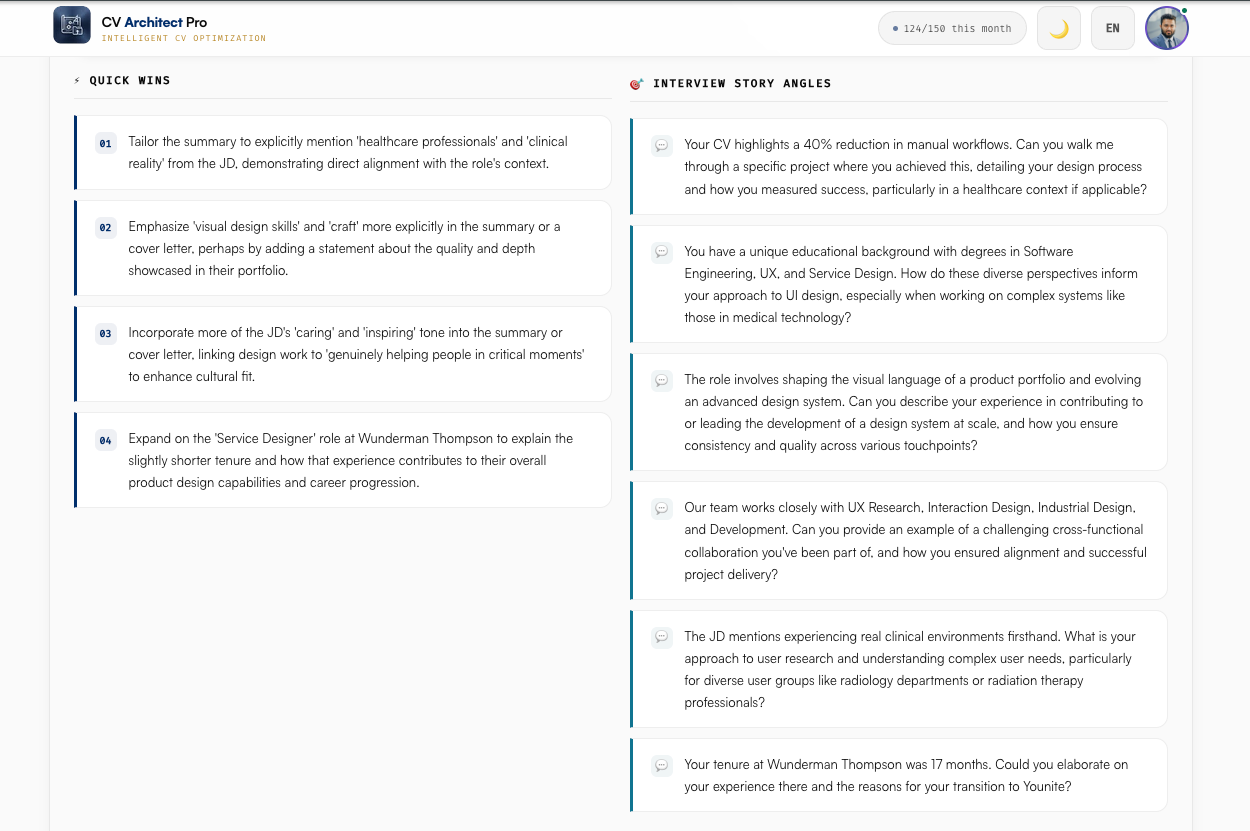
Key screens from the live CV Architect Pro platform — the complete end-to-end pipeline from upload to tailored export.
Landing Page & Value Proposition
Hero section communicating the core promise: simulate real ATS screening before you apply. Designed for instant clarity and trust.
Trust Through Restraint
Navy primary (#002F6C) paired with gold accents (#FECC02) communicates professionalism and premium quality. The dark palette with deliberate whitespace avoids the cluttered look of competitor tools.
Typography Hierarchy
Instrument Serif for display headings creates distinctiveness. Satoshi for body text ensures readability. Fira Code for data elements reinforces the analytical nature of the product.
Progressive Disclosure
Complex analysis results are organized into tabbed interfaces (ATS Simulation, Recruiter Scan, Gap Analysis) so users process information incrementally without cognitive overload.
Conversion-Optimized Components
CTAs use high-contrast gold on navy. Pricing cards use visual hierarchy to anchor on the Pro tier. Pro feature badges create clear value distinction without feeling restrictive.
Navy Primary
#002F6C
Gold Accent
#FECC02
Dark BG
#09090b
Light BG
#fafafa
Blue Active
#4a90d9
Named ATS Simulation Engine
Problem
Existing tools offer generic keyword-matching with no specificity about which ATS platform is evaluating the CV. Users cannot differentiate between how Workday vs. Greenhouse scores their resume.
Design Solution
Designed a simulation layer that specifically models the parsing and ranking logic of 5 named enterprise ATS platforms. Each simulation surfaces platform-specific recommendations — not generic advice.
UX Rationale
Specificity builds trust. When a user sees 'Workday scores your CV at 62/100' instead of 'Your CV is 62% optimized,' the feedback feels concrete and actionable. This specificity is the core competitive differentiator.
Business Impact
This feature is the primary reason users choose CV Architect Pro over competitors. It directly supports premium positioning ($12-29/mo vs. free generic tools) and justifies the subscription price through perceived expertise.
Human-in-the-Loop Co-Creation
Problem
Auto-rewrite tools produce output that users feel does not represent them. This creates distrust and high abandonment rates at the editing stage.
Design Solution
Designed a workshop interface where every AI-suggested change is presented individually for user approval. Users can keep originals, approve changes, or modify suggestions. Interactive skill chips give granular control.
UX Rationale
The insight that users distrust loss of control — not AI itself — drove this entire feature. By making the user a co-author rather than a recipient, the experience shifts from 'AI wrote my resume' to 'I optimized my resume with AI assistance.'
Business Impact
This design decision directly impacts retention. Users who feel ownership of the output are more likely to return for their next application. The co-creation model supports scalable growth by turning users into advocates who recommend the tool because the output genuinely represents them.
Recruiter 6-Second Scan Simulation
Problem
Users do not understand that even after passing ATS, their CV gets an average 6-second human scan. They optimize for keywords but neglect visual hierarchy and STAR methodology.
Design Solution
A simulation that models recruiter scanning behavior — evaluating header prominence, experience structure, achievement quantification, and visual scanability using the STAR framework.
UX Rationale
This feature addresses the full funnel, not just the ATS gate. It educates users about the dual-audience nature of resumes (machine + human) and differentiates the product from tools that only address keyword matching.
Business Impact
This feature increases perceived value significantly, supporting the freemium-to-paid conversion. Users see a multi-dimensional analysis they cannot get elsewhere, which reduces price sensitivity and improves conversion rates.
Privacy-First Browser Architecture
Problem
Users are hesitant to upload their resumes — containing personal details, work history, and contact information — to unknown SaaS tools. This is the #1 barrier to trial.
Design Solution
All CV parsing happens client-side in the browser using Mammoth.js, pdf.js, and Tesseract.js OCR. Files are never transmitted to or stored on servers. This is communicated prominently throughout the interface.
UX Rationale
Privacy is not a feature — it is an architecture decision that reduces the trust barrier at the critical first touchpoint. By processing locally, we eliminate the most common objection before users even encounter it.
Business Impact
This architecture decision removes the sign-up gate for the free tier (no account needed = no data to protect). This reduces onboarding friction to near-zero, directly improving the activation rate and top-of-funnel volume.
41-Language Multilingual Support
Problem
Most resume optimization tools are English-only, excluding the vast majority of global job seekers who apply in multiple languages or non-English markets.
Design Solution
Full UI localization and CV tailoring support across 41 languages. The AI pipeline processes non-English job descriptions and CVs natively, not through translation layers.
UX Rationale
A global-first approach expands the addressable market by 10x compared to English-only competitors. It also serves the large segment of international professionals applying to English-language roles from non-English backgrounds.
Business Impact
This supports scalable growth into non-English markets without separate product builds. It positions the product for international expansion and opens partnership opportunities with universities, career services, and recruitment agencies globally.
CV Architect Pro was built using a vibe-coding methodology — an approach where a designer with engineering fluency uses AI-assisted development tools to rapidly prototype, iterate, and ship production-grade software. This is not no-code. It is a designer operating at the code level with AI as a pair-programming partner.
Speed of Iteration
From concept to live MVP in 4 weeks. Each feature cycle — ideate, design, build, test — took 1-3 days rather than weeks. This velocity enabled rapid validation of assumptions through real user behavior.
Decision-Making as a Builder-Designer
Every design decision was evaluated through a dual lens: 'Is this the best UX?' and 'Can I build this reliably within the constraint?' This eliminates the handoff gap between design and engineering entirely.
Quality vs. Speed Trade-offs
Chose a single-page architecture for speed-to-market, accepting the SEO trade-off. Used client-side parsing for privacy, accepting the browser compatibility trade-off. Shipped with 15 templates, planning to expand based on user demand data.
AI as a Design Material
The AI pipeline (Gemini API) is not bolted on — it is integral to the product experience. Every interaction from analysis to co-creation is designed around AI capabilities and limitations, not retrofitted onto a traditional flow.
SPA vs. Multi-Page Architecture
Chose SPA for development speed, accepting reduced SEO discoverability. Mitigated with structured data (Schema.org) and plan to add landing pages post-launch.
Ship fast, optimize later — when you have traffic data to guide decisions.
Client-Side vs. Server-Side Parsing
Chose browser-based parsing for privacy and zero-friction onboarding. Trade-off: limited support for complex DOCX formatting and older browsers.
Privacy as architecture, not afterthought — it removes the biggest conversion barrier.
Depth vs. Breadth of ATS Simulation
Focused on 5 major ATS platforms rather than attempting to cover all systems. These 5 represent the majority of enterprise hiring volume.
Be specific and credible about 5 platforms rather than vague about 50.
Free Tier Generosity
Gave free users full ATS scoring and analysis (5/mo), gating only editing and premium export. The risk of free-tier satisfaction is offset by the strong conversion trigger of seeing your score.
Demonstrate value before asking for payment — the diagnosis creates the urgency to treat.
Users see measurable improvement in their ATS compatibility score after one optimization cycle
Full optimization flow completed in under 8 minutes, validated through session analytics
Serving users in 41 languages with native processing, expanding addressable market by 10x
From market research to production SaaS with paying users, demonstrating vibe-coding velocity
What I Would Improve
Implement A/B testing on the paywall placement to optimize conversion
Build an onboarding tutorial for first-time users to improve activation
Add testimonials and social proof to the landing experience
Expand template library based on user demand data and industry verticals
What I Learned About Product + Business
Building a SaaS product solo forced clarity on every decision. There is no team to absorb ambiguity — every design choice has direct business consequences. I learned that monetization strategy is not something you add after building the product; it must be embedded in the experience architecture from day one. The paywall placement, free-tier generosity, and conversion triggers are all design decisions, not business decisions bolted on later.
I also learned that the vibe-coding approach — designer with AI pair-programming — is not just faster. It fundamentally changes how you think about design. When you can build what you design within hours, you stop designing in the abstract and start designing for reality. Constraints become materials, not limitations.
How This Project Demonstrates Ownership
Identified a real market opportunity through competitive analysis
Defined product strategy, positioning, and monetization model
Designed end-to-end user experiences with business impact reasoning
Built and shipped a production-grade SaaS product
Made architecture decisions balancing UX, privacy, and scalability
Operated across the full product stack: strategy, design, engineering, and launch