Case 11 · DiabetesCare · 2019
- Role
- UX/UI Designer
- Scope
- Multi-role mobile
- Platform
- iOS · Android
- Outcome
- 3 roles, 1 system
- Team
- Solo concept
↓ Scroll — the work
User roles unified
patient · doctor · family
Core flows mapped
monitor → emergency → reports
Daily injections
RFID-driven measurement
01 — Overview
Diabetes Self Care was developed as a university project in collaboration with LAKKA Technologies Oy. The challenge was to design a mobile application that leverages emerging RFID technology to eliminate the need for daily needle injections while providing a holistic diabetes management platform.
The app connects three distinct user groups — patients, doctors, and family members — through a shared data ecosystem powered by automated cloud analysis.
"Increase awareness and improve the daily lives of diabetics by providing a user-friendly platform to manage their health."
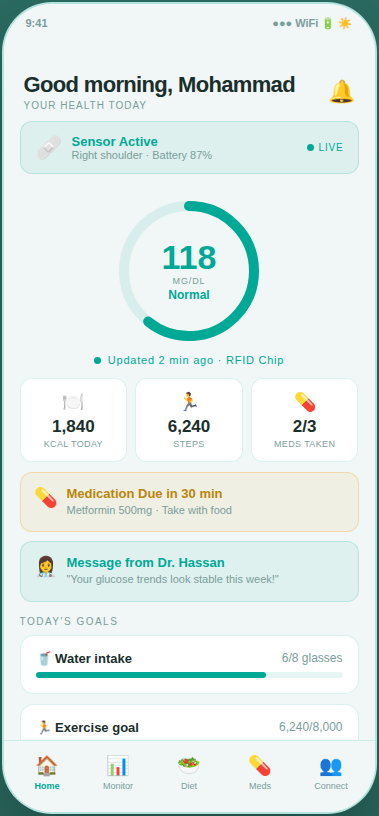
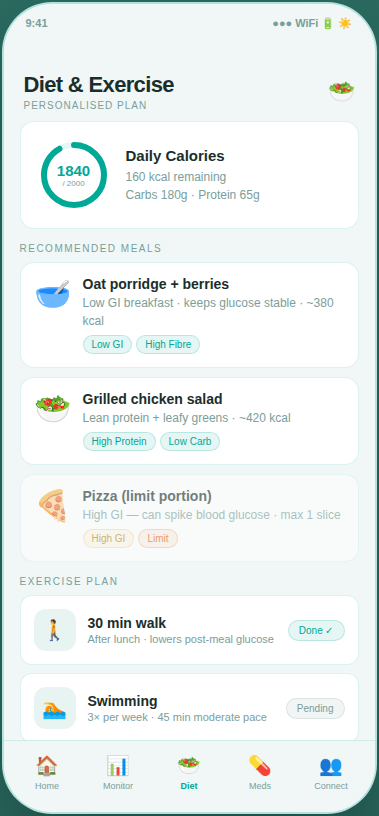
A wearable RFID chip continuously measures glucose levels and transmits data to the cloud. The app analyses health data automatically and delivers personalised diet, exercise, and medication recommendations — all without a single needle.
Interactive Prototype
Experience the App
- • Tap stat cards to navigate
- • Switch user roles
- • Toggle dark/light theme
- • Send emergency alert
- • All nav elements stay in sync
02 — UX Goals
Designing for Wellbeing
System provides necessary information ensuring all user groups feel satisfied with the experience.
Health data analysed on the cloud; only essential information is presented to the user.
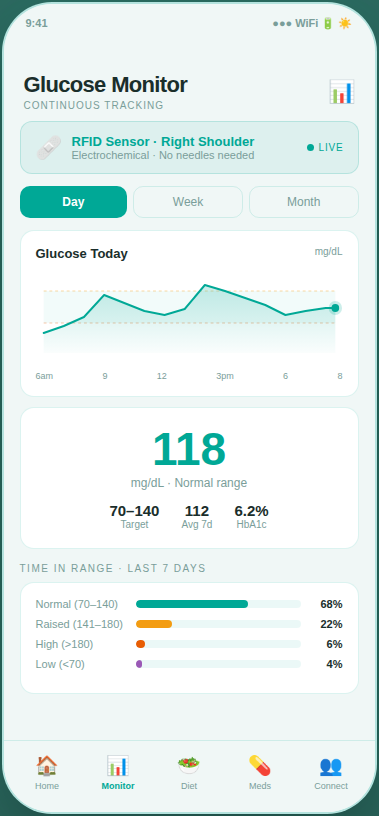
Chip continuously tracks glucose and syncs to cloud automatically — no manual input.
Chip replaces needles entirely; easy to attach to skin with removable bandage glue.
Data is communicated through multi-modal signals — never colour alone. High-contrast glucose readings, large touch targets for elderly and low-dexterity users, and screen-reader support for all critical alerts meet WCAG 2.1 AA compliance.
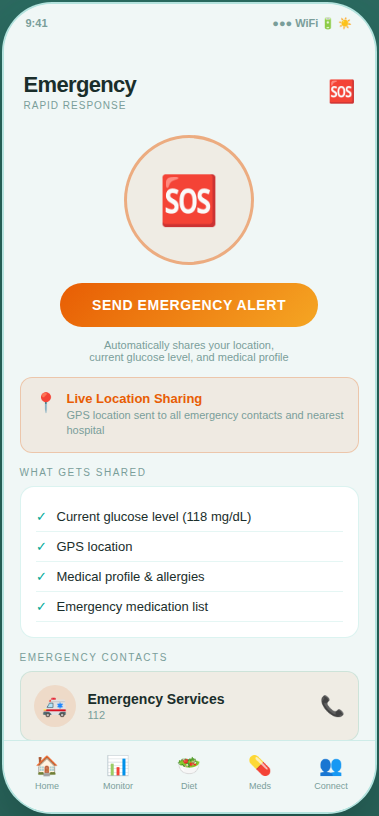
Real-time alerts sent to patient, doctor, and family on critical glucose changes.
03 — Users
Three User Groups
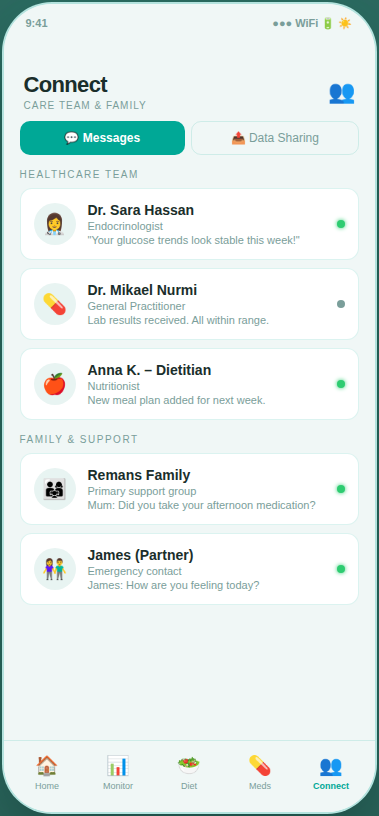
Diabetic individual managing daily health, medication, diet, and glucose levels through the app and wearable sensor.
Endocrinologist or GP monitoring patient data remotely and sending personalised recommendations.
Support network receiving emergency alerts and tracking patient wellbeing in real time.
04 — Proof of Concept
RFID Technology
The proof of concept centres on LAKKA Technologies' RFID-based glucose monitoring chip. This small wearable sensor attaches to the patient's shoulder using removable bandage glue and continuously measures glucose levels through electrochemical analysis — completely eliminating the need for traditional finger-prick testing.
05 — MVP
Minimum Viable Product
A wearable chip attached to the shoulder using removable bandage glue. The sensor auto-connects to the app via Bluetooth and continuously monitors glucose levels, transmitting data to the cloud through the mobile network. The chip lasts 14 days before replacement.
- Health status tracking
- Diet & exercise planning
- Check-up reminders
- Patient–doctor–family communication
- Medication & appointment reminders
- Personalised suggestions
- Emergency feedback
06 — Problem Context
Real-World Scenario
The project focuses on supporting diabetes patients during sudden health fluctuations. In everyday situations, such as social gatherings, patients may experience symptoms like dizziness due to fluctuating glucose levels.
The proposed system provides real-time assistance through mobile notifications, emergency guidance, and alerts to caregivers — ensuring patients receive immediate support when they need it most.
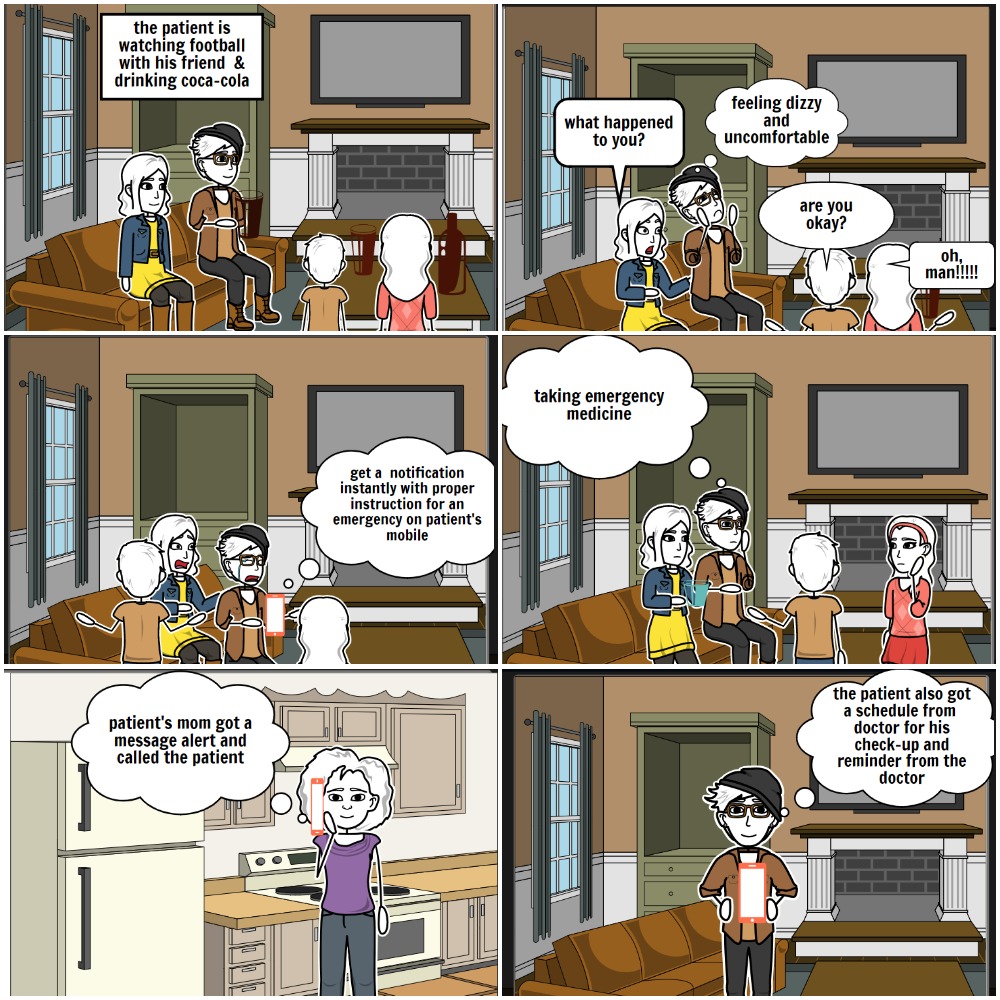
Storyboard — Emergency scenario flow
07 — Stakeholders
Stakeholder Analysis
To understand the ecosystem around the healthcare solution, stakeholders were mapped based on their power and interest in the system using a Power/Interest Grid.
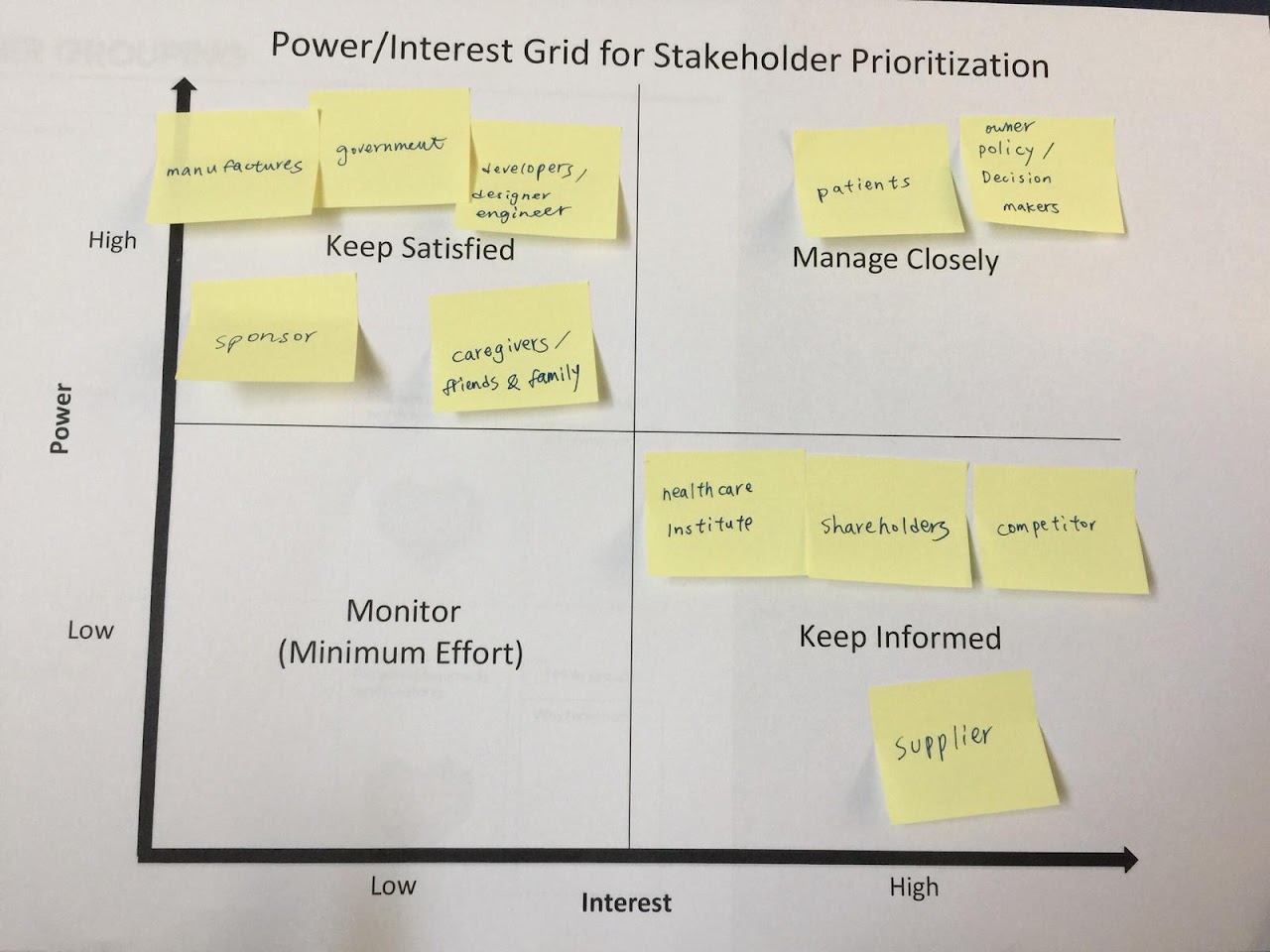
Power/Interest Grid for Stakeholder Prioritisation
High power, high interest — core users and decision-makers shaping the product.
High power, low interest — ensure their needs are met to maintain support.
Low power, high interest — regular updates to maintain engagement.
Low power, low interest — monitor with minimum effort.
08 — Ideation
Concept Development
Early design ideas were explored through low-fidelity sketches to quickly test different layouts and feature structures. These sketches focused on core functionalities such as glucose monitoring, medication reminders, diet and exercise tracking, and emergency contact access.
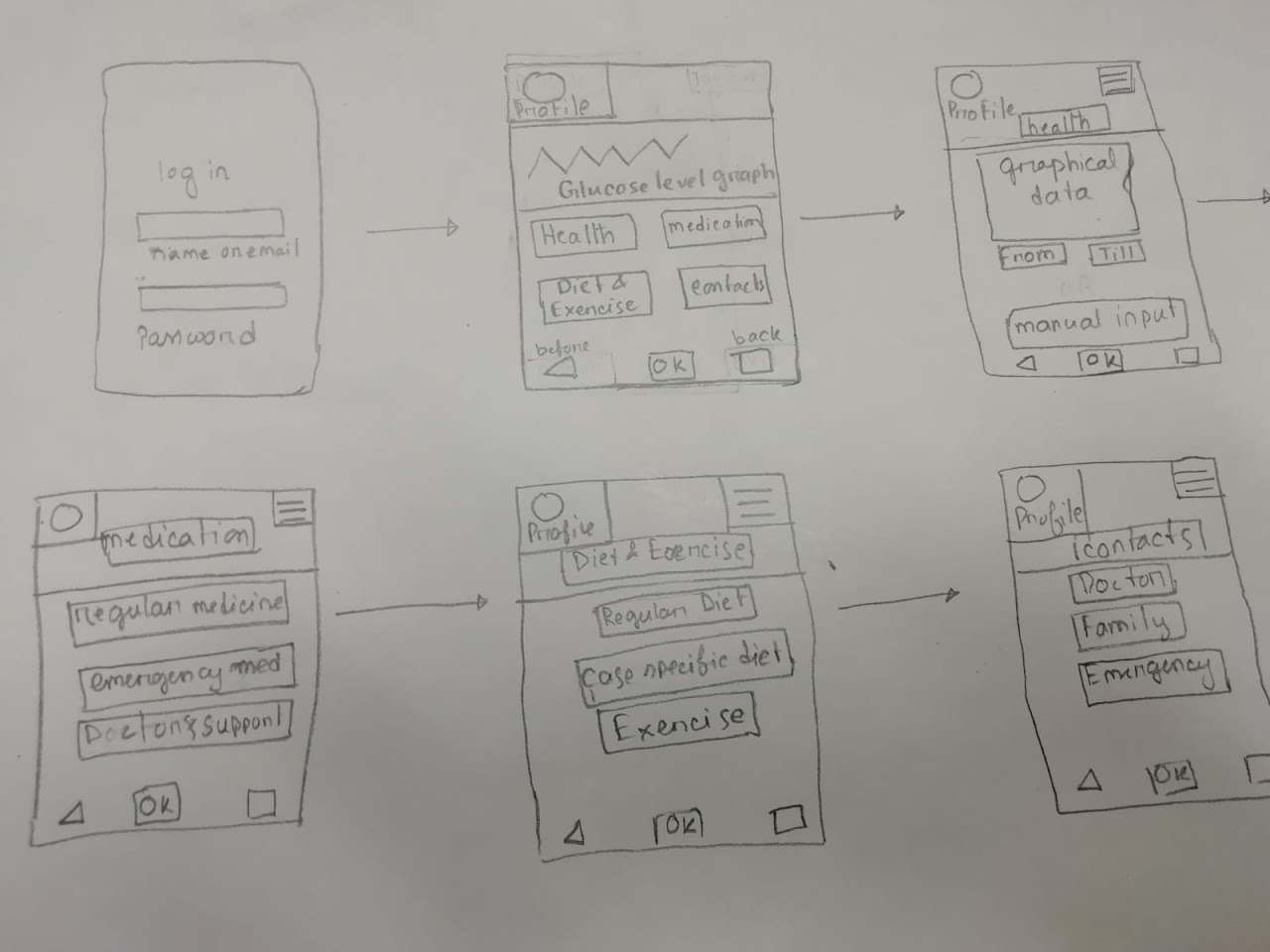
Early wireframe sketches — brainstorming core app structure
09 — Design Process
From Research to Prototype
08 — Idea Validation
Testing with Real Users
Semi-structured interviews were conducted using storyboard-based validation. Three participants from different backgrounds evaluated the concept and provided feedback on its feasibility and user experience.
Appreciated the needle-free approach and automated data sharing with doctors.
Valued the emergency alert system and family notification feature.
Highlighted the importance of personalised diet suggestions and easy-to-use interface.
09 — Reflection
Design Decisions
RFID chip eliminates daily needle injections — the single most validated design decision.
Three distinct user roles in one app required careful information architecture for each view.
Cloud automation reduces manual input to near-zero — the key to minimising user effort.
Colour language: teal = normal, amber = raised, orange = high, red = low — consistent across all screens.
Emergency system notifies all three user groups simultaneously, reducing response time.
Personalised meal and exercise suggestions are generated from analysed glucose data, not manual entry.
Dark mode screens designed for the Diabetes Self Care app — featuring continuous glucose tracking, personalised health plans, and emergency response.
Light mode screens with a clean, clinical aesthetic — optimised for readability and daytime use.